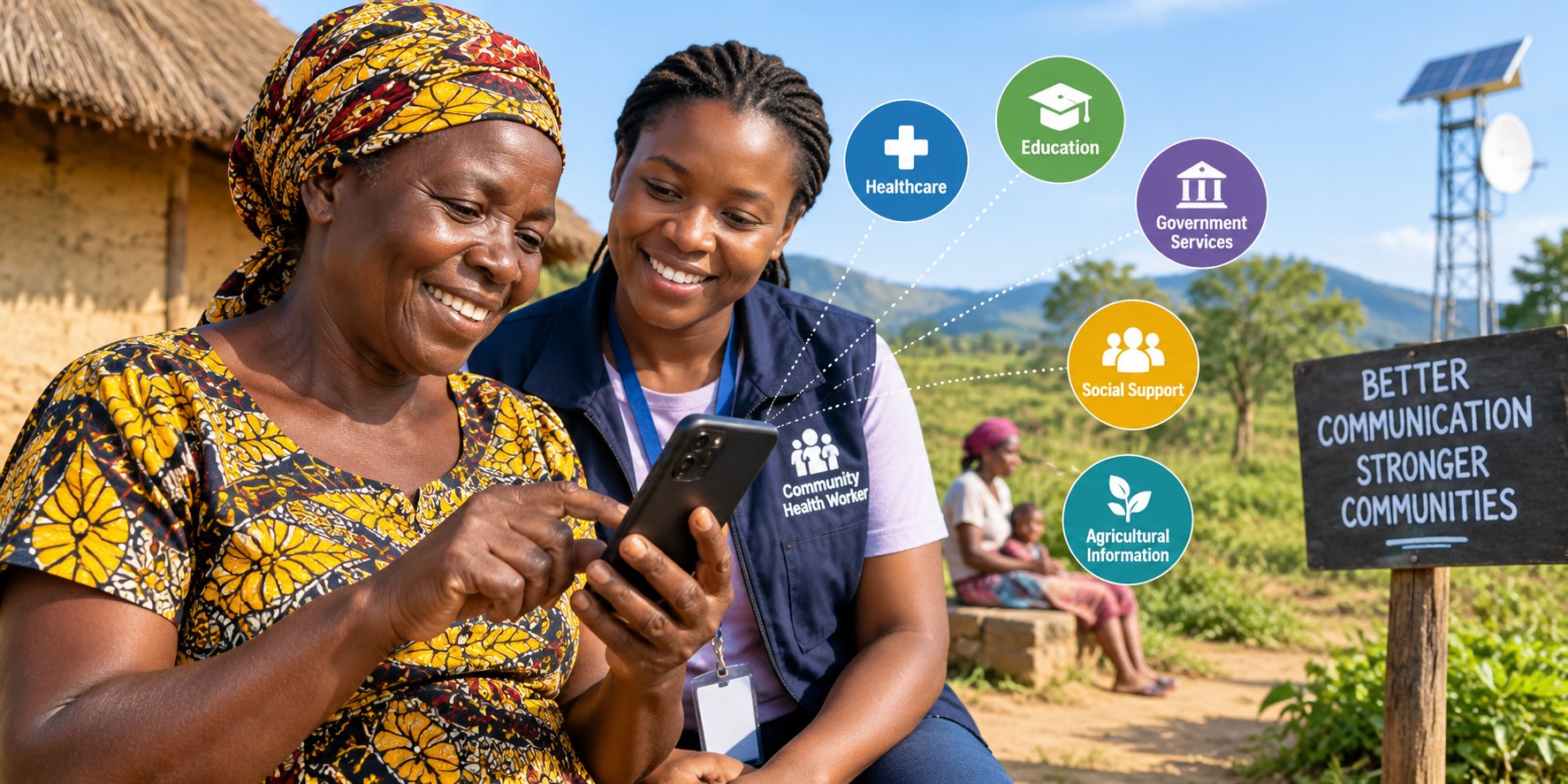
Connecting underserved communities to information, opportunities, and better service delivery
In an increasingly connected world, access to reliable information and communication is essential for social and economic development. Yet, for many people in rural Zimbabwe and other underserved communities, accessing healthcare, education, government services, and social support remains a significant challenge. Long distances, limited infrastructure, high communication costs, and inadequate access to information can prevent vulnerable populations from receiving the assistance they need.
Technology offers an opportunity to bridge these gaps, making essential services more accessible, inclusive, and responsive to community needs.
Breaking Communication Barriers
One of the most effective ways technology can support marginalized communities is by improving communication between residents and service providers. Mobile phones, SMS platforms, telephone hotlines, and digital communication centers can connect people with government agencies, nonprofit organizations, healthcare providers, and social service agencies.
For example, a farmer in a remote village could receive timely information about agricultural programs, weather updates, or available financial assistance through SMS notifications. Similarly, a rural resident seeking help with a social welfare application could contact a service center by telephone instead of traveling long distances to a government office.
These solutions can reduce transportation costs, save time, and help ensure that important information reaches people who might otherwise be excluded.
Improving Access to Essential Services
Technology can also transform how essential services are delivered. Telehealth services can connect rural patients with healthcare professionals, while digital learning platforms can provide students and teachers with additional educational resources. Mobile information systems can help communities identify available social assistance programs and understand how to access them.
In Zimbabwe, digital information management systems can help organizations monitor rural water, sanitation, and hygiene services. By collecting and analyzing information more effectively, service providers can identify underserved communities, prioritize resources, and respond more efficiently to local needs.
These approaches can improve coordination, strengthen accountability, and help ensure that limited resources reach the people who need them most.
Designing Technology for Everyone
Digital inclusion requires more than simply introducing new technology. Solutions must be affordable, accessible, and appropriate for the people they are intended to serve.
Many rural households face unreliable internet connectivity, limited electricity, and barriers to digital literacy. Communication systems should therefore incorporate practical alternatives, including SMS messages, voice calls, local-language information, and platforms that function with limited internet access.
Special attention must also be given to people with disabilities, older adults, women, and other groups who may face additional barriers. Community training, accessible interfaces, and local support services can help ensure that technological progress benefits everyone.
Protecting personal information is equally important. Organizations must handle community data responsibly, maintain confidentiality, and establish secure systems that people can trust.
Building Inclusive Communities Through Innovation
At The Dzapasi Group, our expertise in communication systems, software development, data management, and analytics highlights the potential for technology to do more than improve organizational efficiency. These capabilities can also help create stronger connections between institutions and the communities they serve.
By developing appropriate communication platforms, supporting data-driven decision-making, and helping organizations improve service delivery, technology partners can contribute to a more inclusive digital future.
The goal is not simply to connect more people to technology, but to ensure that connectivity translates into meaningful opportunities, accessible services, and an improved quality of life.
Ultimately, bridging the digital divide requires collaboration among technology providers, government agencies, nonprofit organizations, and local communities. By putting people at the center of innovation, we can help ensure that geography, income, or disability does not determine who has access to information, essential services, and opportunities for a better future.